F1TENTH Autonomous Vehicle
project
AI
optimization
controls
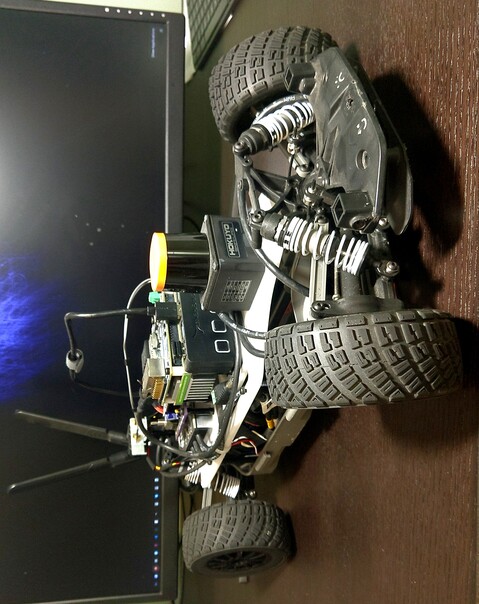
I built this during the pandemic to learn about model predictive control and autonomous systems design. The F1TENTH platform is build on a 1/10 scale rc car that can navigate a track autonomously.
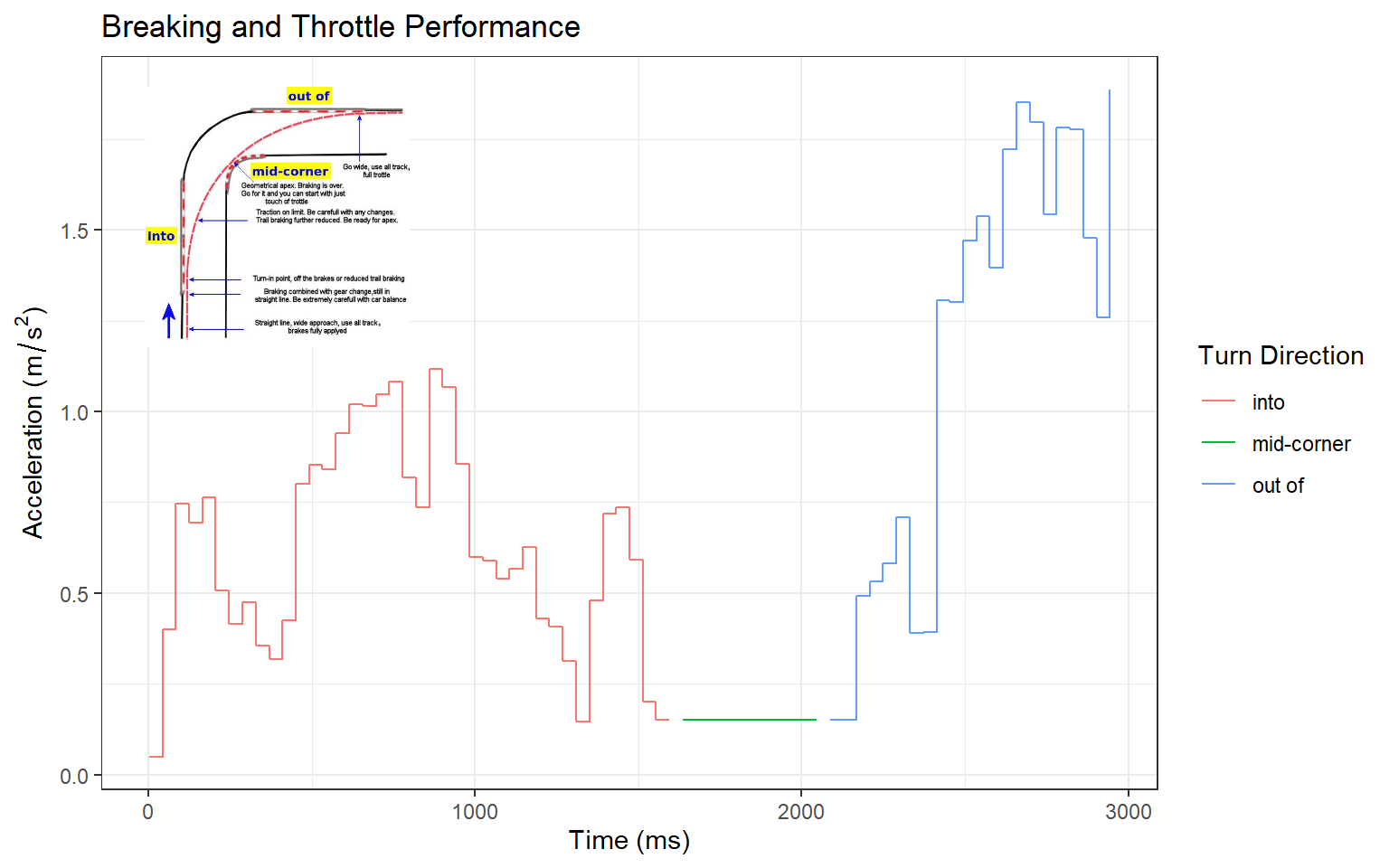
My main focus was to improve the performance by modifying the hardware configurations. For example, using DOE with sway bar type and shock stiffness as factors, we could optimize lap times with specific throttle characteristics.
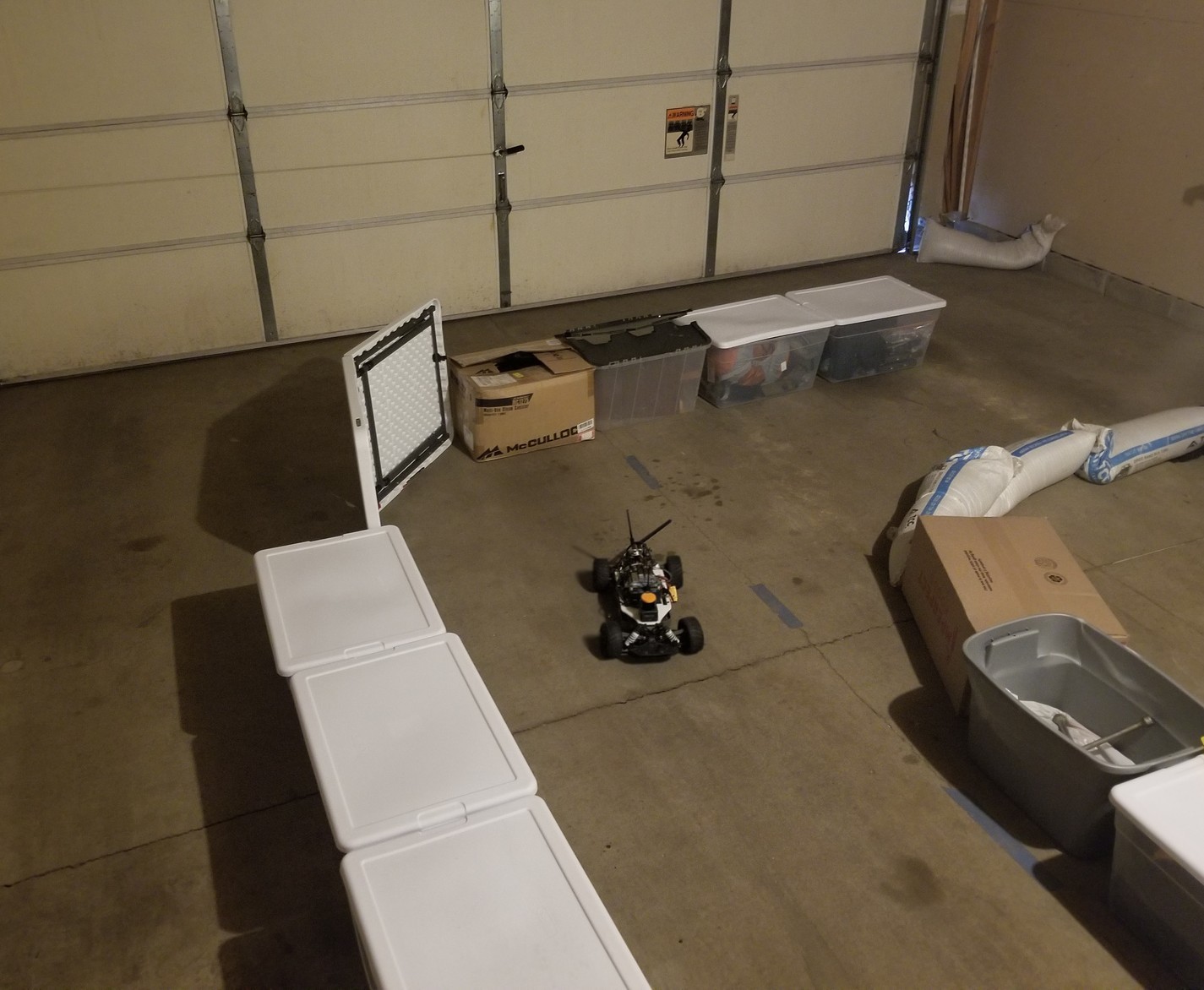
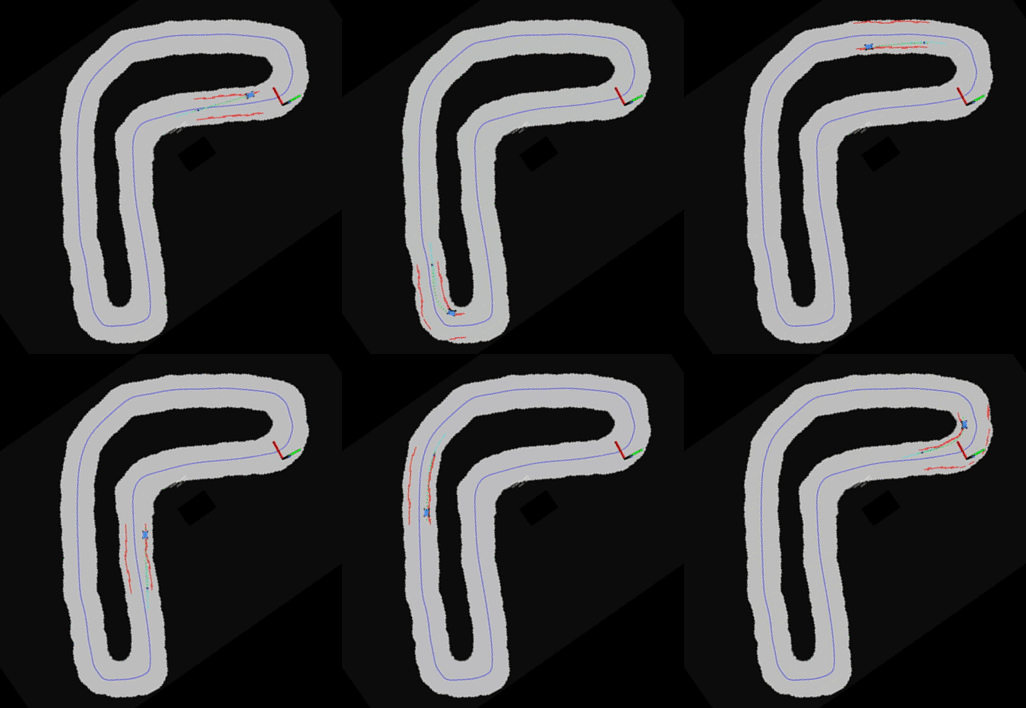
Some DOE results exploiting the above throttle characteristics:
# A tibble: 1,440 × 5
   sway_bar_type shock_stiffness condition   time trial
   <chr>         <chr>           <chr>      <dbl> <dbl>
 1 Stiff Low     Travel High     mid-corner  2404     1
 2 Stiff High    Travel Low      into        2218     1
 3 Stiff High    Travel High     into        2179     1
 4 Stiff High    Travel High     out of      2142     1
 5 Stiff High    Travel High     into        2128     2
 6 Stiff Low     Travel High     out of      2063     1
 7 Stiff Low     Travel High     out of      1986     2
 8 Stiff Low     Travel High     into        1947     1
 9 Stiff High    Travel Low      mid-corner  1941     1
10 Stiff High    Travel High     into        1858     3
# ℹ 1,430 more rows
Validation of the optimized parameters:
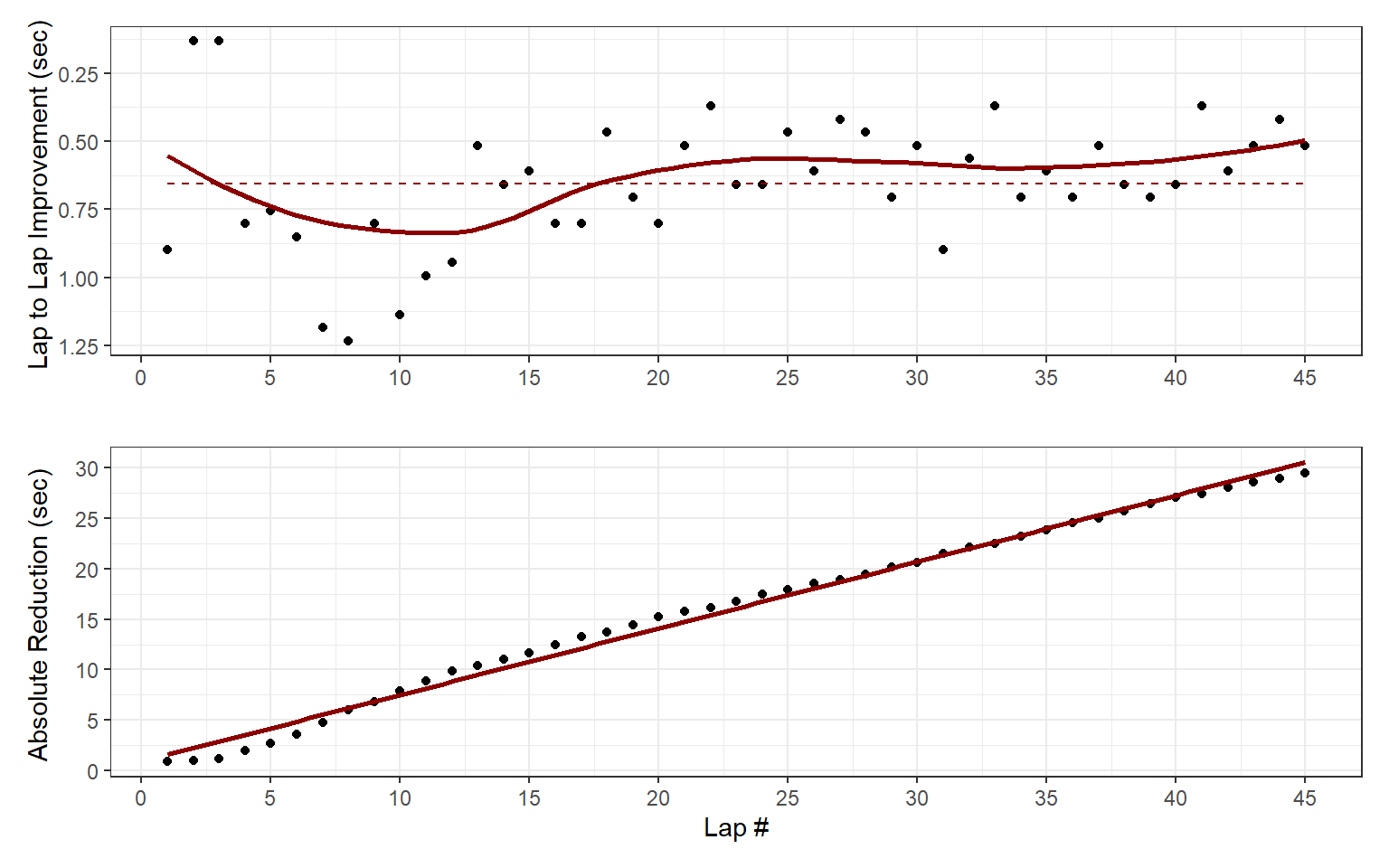
The easiest way to improve lap times is to code up a new algorithm. But with a little investment, you can optimize system performance, too.